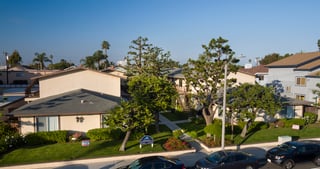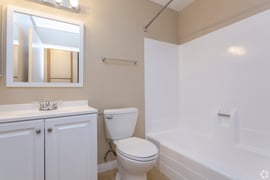
Local apartment marketing gives prospective residents accurate information about the property’s neighborhood, then measures whether that information leads to inquiries, completed tours and leases. Start with verified amenities and a current listing. Choose advertising settings that meet housing-ad requirements, keep access open to people relocating from elsewhere and compare results with the money and time spent.
Give prospects neighborhood facts they can use
Rent, layout and availability remain essential. Neighborhood information helps a prospect evaluate the location alongside those details. Do not assume that the best prospects already live within a few blocks or that everyone values the same amenities. Explain what is nearby and let each person decide whether it meets their needs.
- Community anchors. Identify parks, transit stops and other useful destinations by name. Check the route and distance before calling something walkable. Describe the route or source rather than promising an exact commute time. School locations can be factual information; avoid language that suggests a preferred household type or makes unsupported claims about school quality.
- Local businesses. A café, gym or restaurant can be useful context. Confirm it is still operating before publishing a guide. If considering a resident discount, confirm the business’s permission, terms, expiration and who funds it before advertising the offer. A proposed partnership is not an available benefit.
- Events and local guides. A dated guide to public events or nearby services can help someone understand the area. Link to the organizer’s current information and identify any cost or access conditions. Sponsoring an event is a separate spending decision; do not imply participation is required to obtain housing.
Use objective descriptions of the location and apartment. Keep the same accurate listing information available to local prospects and people moving from another city. Photographs, maps and useful arrival instructions can explain a neighborhood without claiming that a particular group belongs there.
Use each digital channel for a defined purpose
Paid location-based advertising
As checked October 3, 2026, Google’s housing-ad targeting policy for the United States and Canada prohibits targeting by age, gender, parental status, marital status or ZIP code. It permits certain geographic targeting, including a radius of at least 1 kilometer. That platform rule does not guarantee that everyone reached lives or works nearby, and it does not establish that a particular campaign complies with every applicable requirement.
Before using Facebook or another platform, check its current housing-ad category and targeting requirements in the account you will use. Do not transfer Google’s numeric limits to another service. Review both inclusions and exclusions before allocating spend, and keep a record of the approved settings and changes.
Housing advertising also has legal requirements. 24 CFR §100.75 prohibits discriminatory housing statements and advertisements based on the protected characteristics it lists. Its examples include choosing advertising media or locations that deny housing information to market segments because of those characteristics. Describe the property and amenities without signaling a protected-group preference. Platform approval alone does not resolve that legal review.
Accurate local listing information
Use the property’s actual address and neighborhood name in clear listing text. A phrase such as “apartments near [verified transit stop]” should match the location and explain the distance. Keep the available apartment, rent, photos and move-in date current. Adding neighborhood keywords to an outdated listing will not fix missing information or an unanswered inquiry.
Neighborhood content and distribution
A guide to nearby shops, a business spotlight or a local-history article can answer a specific prospect question. Check the details and any permission needed for images or an offer. Put a clear route from that content to the available apartment and a monitored contact method. Keep general listing channels available so relocating prospects can find the same opportunity.
Follow the inquiry through to a completed showing
For each campaign, record its purpose, budget, start and end dates, advertised units and person responsible for inquiries. Use a distinct campaign link or ask how the prospect found the listing, while recognizing that a person may have seen several channels. Keep prospect information within the authorized leasing workflow.
Count inquiries, requested tours, confirmed tours, completed tours, applications and signed leases separately. An inquiry is not a completed showing, and an application is not a lease. Use the same definitions and reporting period when comparing channels. Record units becoming available or unavailable during the campaign so the opportunity to lease is clear.
If inquiries arrive but showings do not happen, inspect response coverage, appointment availability and access. Our apartment-tour scheduling guide explains host coverage, confirmations and the contact path. A better advertisement will not correct a booking that no one can honor.
Test one campaign with a stated budget
Hypothetical example, not a Coastline result: a vacant-apartment campaign spends $400 during a defined reporting period and records 20 inquiries, eight completed tours, three applications and one signed lease from the tracked group. Advertising cost is $20 per inquiry, $50 per completed tour and $400 per signed lease. Those figures exclude photography, staff time and other leasing costs; state those costs separately if calculating total acquisition expense.
If no lease is signed, report the spend and stage counts; cost per signed lease cannot be calculated by dividing by zero. Continue following the tracked inquiries through the normal reporting cutoff, since a lease may occur after the advertisement ends. Disclose uncertain attribution instead of assigning every lease to the last link clicked.
Compare these results with a suitable prior period or another channel serving comparable available units. Note changes in rent, concessions, condition, availability, season and response coverage. A lower cost per inquiry can still produce fewer completed tours or leases. A change in days vacant is worth investigating, but it does not alone prove that neighborhood content caused faster leasing.
Keep the neighborhood information current
Review the guide when businesses close, transit service changes, an offer expires or an event passes. Give the person maintaining the listing a date for the next check. Preserve useful content for relocating prospects rather than relying on local references they may not recognize.
Track renewal feedback and residents’ reported reasons separately if evaluating longer-term value. A leasing campaign’s inquiry count does not establish improved retention, lower turnover or increased property value. Use the property’s renewal and move-out records to evaluate those outcomes.
For the next leasing review, bring the live listing, the neighborhood facts checked, the campaign’s settings and spending, and the counts at each stage. Choose the next change from the actual gap: inaccurate information, inadequate response coverage, missed tours or a channel that produces little useful activity. Local marketing is a tool to test with those records, not a promise of a faster lease.




.webp?width=300&height=200&name=charles-forerunner-3fPXt37X6UQ-unsplash-1920w%20(1).webp)