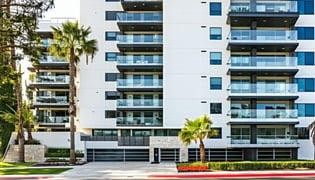
Industrial management can affect nearby real estate through employment, business activity, infrastructure and environmental conditions. Those changes can influence demand for homes and commercial space. Their effect on a particular property's value depends on the location, competing supply, operating income, financing conditions and the timing of the change.
Here, industrial management means the way a manufacturing, distribution or other industrial business runs its operations. Managing the real estate that houses that business is a separate assignment. An owner evaluating a neighborhood needs to understand both the employer's activity and the property market around it.
Industrial activity can change local demand
A growing manufacturer may need more employees, supplier space and services. A distribution facility may change delivery activity and nearby business demand. These are reasons to investigate the market. They don't establish how much rent a particular property can achieve or what a buyer will pay for it.
Jobs, wages and commuting
Ask whether a reported expansion has produced ongoing jobs, temporary construction work or only an announcement. Consider wages, working hours and where employees can realistically commute from. A new workplace may draw people who already live in the region, so its headcount alone doesn't tell you how many households will need another home.
The Bureau of Labor Statistics' Quarterly Census of Employment and Wages provides employment and wage data by industry at county, metropolitan, state and national levels. Check the reporting period and geography. County-level employment growth is useful context; it doesn't measure demand at the apartment building down the street.
Housing and commercial supply
Look at what prospective occupants can choose from. Existing vacancies, newly delivered buildings and projects under construction can change the effect of additional demand. Compare the property's use, condition and asking terms with relevant alternatives, then distinguish asking rents from signed lease evidence.
The California Department of Real Estate's appraisal reference explains supply and demand, substitution and the economic, environmental and government forces that influence value. Its framework supports examining several inputs together. A positive employment story is one part of that analysis.
Infrastructure matters when it serves the property
A road improvement may make a site easier to reach. Utility capacity can affect whether a business can use a building. Transit can change an employee's journey. Identify the connection between the project and the property before putting a rent increase into a forecast.
Read the responsible agency's project documents for the approved scope, funding, construction status and expected opening date. A proposal, a funded project and an operating improvement represent different stages. Record which stage supports your assumption and what delay would mean.
Also consider the work period. A retail tenant may face disrupted customer access while a road is being rebuilt. A new truck route may help an industrial tenant while creating noise or access concerns for nearby residents. Community value includes how the improvement works for the people who use the area every day.
Environmental improvements need evidence
An industrial operator's investment in cleaner equipment or more efficient energy use can be relevant to the surrounding area. Review what changed, which site it affects and what evidence describes the result. A sustainability announcement alone doesn't establish a cleaner site, a higher achievable rent or a neighborhood-wide price premium.
Past property uses and environmental conditions deserve their own review. The EPA's All Appropriate Inquiries overview explains the evaluation of environmental conditions, including inquiry into past uses and review of records. It also describes the environmental professional's role. The review appropriate to a property depends on its circumstances and the transaction.
For an owner, responsible industrial activity and a livable neighborhood are worth understanding on their own terms. Investigate possible benefits alongside traffic, noise, site history and land-use constraints. Keep an unresolved environmental question visible in the property analysis.
Property income still needs a separate calculation
A stronger local economy may support leasing, but an income property's operating numbers remain central to its valuation. Examine collected income, vacancy and collection assumptions, operating expenses and upcoming capital needs. Financing affects the owner's cash position and can influence the market in which buyers obtain funds.
In a simplified direct-capitalization calculation, indicated value equals annual net operating income divided by the capitalization rate, expressed as a decimal. The DRE reference describes this income approach. The rate and income assumptions need support from the relevant property and market; the formula cannot supply that evidence.
Net operating income reflects property income after operating expenses, before mortgage principal and interest. Capital projects, transaction costs and the owner's taxes and financing need separate treatment. Coastline's cap-rate sensitivity guide shows how to change income and rate assumptions separately.
A hypothetical expansion with competing effects
Suppose a distribution business expands near a rental property. Employment grows and an access road improves. The owner expects additional leasing demand. At the same time, another rental development opens, construction temporarily restricts access and buyers require a higher capitalization rate.
For this illustration, assume annual net operating income increases from $100,000 to $110,000. That operating improvement can occur alongside a lower income-based value indication:
- Starting assumption: $100,000 divided by 0.05, an assumed 5% cap rate, equals $2 million.
- Changed assumption: $110,000 divided by 0.06, an assumed 6% cap rate, equals approximately $1.83 million.
The income rose while the indicated value fell because the assumed rate also changed. These figures are hypothetical, with no claim about current local rates or a Coastline property. This simplified calculation doesn't establish an appraisal, sale price or investment return.
Test the expansion's effect on actual leasing, expenses and access as evidence develops. If the new supply absorbs demand, the road opening is delayed or operating costs rise, revise the income assumptions. Keep the capital work and cash timing visible so an improving neighborhood story doesn't conceal a property funding need.
What owners should verify before changing assumptions
Start with the employer's actual activity, dated employment and wage data, and the status of the infrastructure serving the property. Add relevant rental and vacancy evidence, competing supply and information about environmental and permitted-use constraints. Note the source and date for each material assumption.
Then explain how those findings affect this property's income, expenses, capital plan and possible value. Keep uncertain inputs separate from observed results. When a transaction requires a valuation, the relevant property evidence belongs in the qualified appraiser's analysis.
Long-term ownership calls for understanding the businesses, workers and residents who depend on the area. Industrial management is one influence on that community. Evaluate its effect through the market and the property itself, with room for both improvement and disruption. For the day-to-day building responsibilities, read the commercial property management introduction.





 Explore Our Services
.webp?width=300&height=200&name=charles-forerunner-3fPXt37X6UQ-unsplash-1920w%20(1).webp) Our Company
Our Company About Our CEO
 Explore Our Blog