
At Coastline Equity, we use the Entrepreneurial Operating System, or EOS, to make responsibilities, priorities and unresolved issues visible across the company. Its value in property management comes from the follow-through: who owns the work, what the numbers show and what happens when something falls behind.
We began using EOS in 2017 after discovering Traction by Gino Wickman. That history matters because our operating approach developed alongside the growth of our property management business. The useful question for an owner today is how that approach shows up in the work on their property.
What EOS organizes
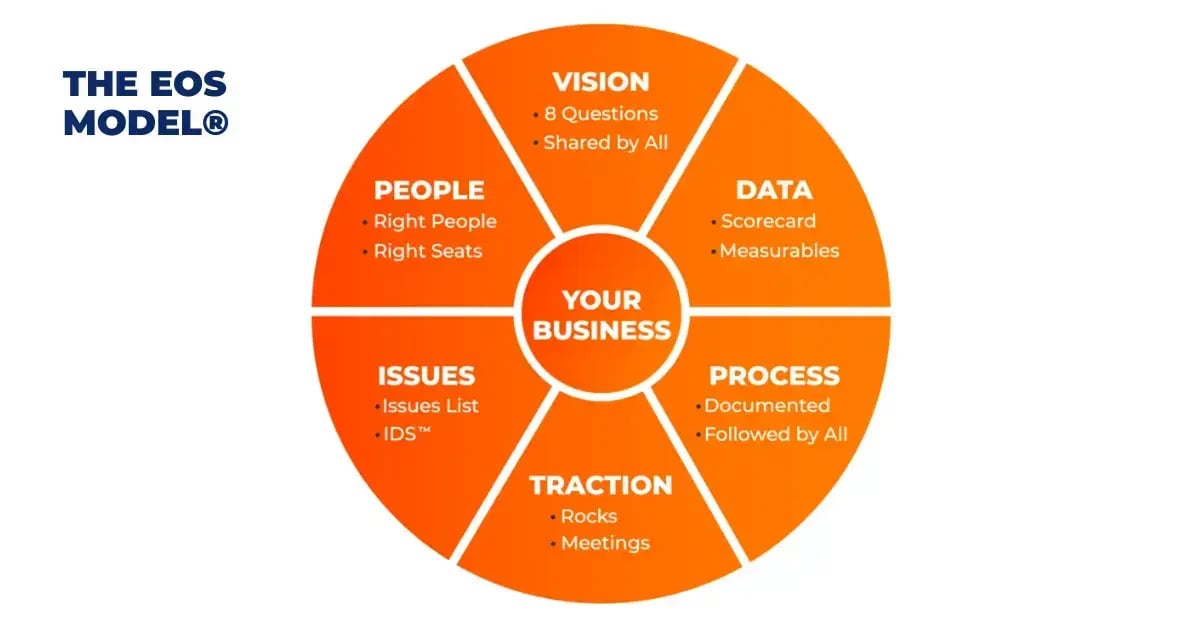
The official EOS model has six components: Vision, People, Data, Issues, Process and Traction. Together, they address direction, responsibility, measurement, problem-solving, documented work and execution.
EOS supplies our internal accountability structure. Property Management Excellence is our client-facing doctrine; PME OS is the operating framework for applying it. An EOS meeting supports the property work by identifying an issue and assigning responsibility. The property's records and the completed work show what happened.
For an owner, that distinction is practical. A meeting note saying a repair was discussed is different from a confirmed vendor appointment, a documented completion and a report explaining the cost.
Give the team a shared direction
The Vision/Traction Organizer, or V/TO, connects the company's direction with its plans and priorities. At Coastline, our documented EOS procedures also call for quarterly State of the Company meetings so the team can review the previous quarter and the work ahead.
That direction needs to reach the people handling daily work. Leasing, maintenance, accounting and property management can each see a different part of the same problem. A move-in might be scheduled while a repair remains open or a required document is still missing. A shared priority gives those teams a reason to resolve the dependencies together.
Growth and changing market conditions belong in that discussion, too. Leadership has to consider the work a larger portfolio creates, the staffing and systems it needs, and the service commitments already in place. A planning tool helps organize those decisions; it does not establish that growth has improved an owner's results.
Assign responsibility and review the work weekly
Coastline's procedures call for weekly Level 10 meetings and regular supervisor check-ins. Those meetings give team members a place to raise issues, review priorities and agree on follow-up. The person responsible for an action should be clear enough that another department can find them without asking several people to route the question.
EOS Worldwide describes the Level 10 leadership meeting as a weekly, 90-minute meeting with a fixed agenda. Its Scorecard review and issue-solving time create a recurring opportunity to address work that is off track.
A recurring meeting is useful when it produces a specific action. "Follow up on the repair" leaves too much open. Confirming which vendor will attend, who will arrange access and when the next status update is due gives the team something it can complete and verify.
Residents and commercial tenants should not have to understand our meeting structure to get a useful answer. The internal follow-up should support a clear explanation of the current status and next step. Our repair approval and reporting guide explains the property-level evidence an owner can look for after work is approved.
A Scorecard has a weekly cadence
The EOS Scorecard is reviewed weekly. Property software can contain newer transactions and work-order updates between meetings, but that does not make the EOS review a real-time monitoring system.
Coastline's scorecard procedure calls for five to fifteen focused measures, one responsible owner for each measure, a weekly target and a rolling thirteen-week view. The team reviews numbers that are off track and uses IDS, Identify, Discuss and Solve, to address the underlying issue.
The procedure gives examples such as units ready for move-in and preventive maintenance tasks completed. These are examples of measures teams can use, rather than a published statement of every department's current Scorecard. A useful measure needs a definition: what counts as ready, which period it covers and which record supports the number.
An illustrative unit-turn review
Suppose a team's weekly target is four units ready for move-in, and only two meet the agreed definition. This is an illustrative example, not a reported Coastline result.
The two-unit gap starts the discussion. One apartment might be waiting for a vendor visit, while another has completed work that has not been checked. The responsible team member needs to establish which condition applies and what evidence is missing. Simply changing the status to "ready" would hide the problem.
The follow-up could be a confirmed visit for the first unit and a completion check for the second. At the next review, the team should be able to explain what was completed and what remains open. The owner can then connect the operating update to the vacancy period, proposed move-in and property report.
Document the process and set quarterly priorities
Coastline uses Whale to document procedures and provide training resources. Documentation makes it easier for a colleague to pick up work when responsibility changes, but the team still has to follow the procedure and keep the relevant property records current.
Rocks are quarterly priorities. They give a larger improvement a defined owner and completion point while daily service work continues. For example, a team might set a quarter's priority to improve a recurring handoff between leasing and maintenance. That is an illustrative improvement, not a claim that Coastline completed a particular project or achieved a measured savings.
A Rock should make clear what finished means. Writing a procedure, training the team and checking whether the handoff is being followed are separate parts of the work. Routine requests also need daily attention. An urgent property condition should not wait for the next weekly meeting or quarterly review.
The original EOS Worldwide video explains the framework. Its general statements about business improvement do not measure Coastline's service response, resident satisfaction, retention or an individual property's financial results.
What an owner should expect to see
EOS helps us organize the company. Owners evaluate the management work through their property: accurate reports, traceable maintenance follow-up, clear responsibilities and decisions brought to them with the relevant information.
The management agreement still governs scope and decision authority. A team meeting or quarterly priority does not expand spending authority or replace an owner's required decision. The same applies to a proposed service change: it needs to be reconciled with the property, agreement and resources available.
When reviewing a manager, ask how an unresolved issue moves from a reported condition to an assigned action and verified completion. Ask how the owner learns that it remains open. The answers tell you more than the name of the software or meeting system.
Coastline Equity provides commercial and multifamily property management services in Southern California. If you want to discuss the operating responsibilities for your property, contact our team with its location, property type and the work you want help managing.

About the Author: Anthony A. Luna
Published · Last Updated
Anthony A. Luna is the Owner and CEO of Coastline Equity and author of Property Management Excellence. A licensed California real estate broker, he leads commercial and multifamily management operations across Southern California.
Services & Regional Coverage
Let's elevate the property management industry together. Share this blog with fellow investors.




More about Coastline Equity
-
Property Management Services
 Explore Our Services
Our team will handle all your property needs, offering specialized services such as in-depth inspections, liability management, staff recruitment and training, and round-the-clock maintenance—expert support tailored to the unique requirements of your real estate assets.
-
About Us
 Our Company
Our dedicated team transforms property management challenges into opportunities. From tenant management to streamlined rent collection and proactive maintenance.
-
Property Management Excellence
 About Our CEO
Anthony A. Luna is CEO of Coastline Equity and author of Property Management Excellence. He writes about Southern California commercial and multifamily property management, owner decisions and the work required to follow repairs through completion.
-
Insights
 Explore Our Blog
Learn more about Coastline Equity's property management practices & processes and how we support our clients with education and a growth mindset. Coastline Equity Property Management is your partner as you continue to learn and grow.
News & Updates