The answer is that communication breakdowns cost owners money because they hide the truth until the property has already paid the price. Owners should not measure communication by how many emails they receive. They should measure it by whether they can see what matters, make clear decisions, and trust that follow-through is happening.
The Real Issue
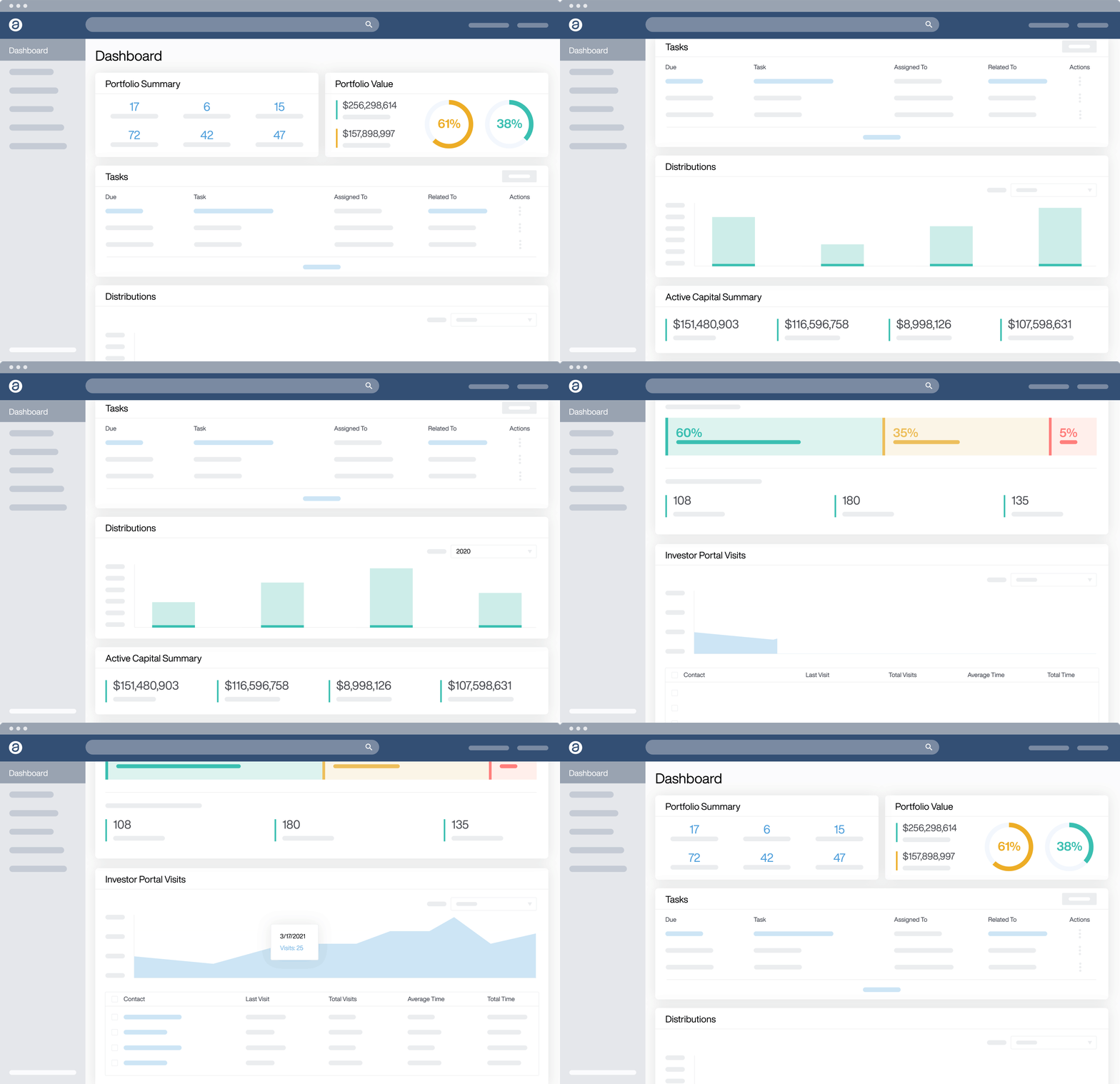
The surface issue is usually a missed call, a vague update, or a report that arrives late. The real issue is weaker operating visibility. When an owner cannot see vacancy movement, delinquency, recurring maintenance, tenant risk, vendor follow-through, or budget variance in a steady rhythm, the owner is forced to manage by feeling. That is a bad way to protect an asset.
Why This Matters for Owners
For a Southern California owner, communication is not a courtesy. It is part of risk management. Regulation is tighter, repairs are more expensive, tenants expect faster response, and margins can move quickly. A small delay in communication can become a late turn, a larger repair, a missed renewal, or a loss of trust between the owner and the management team.
The Owner Standard
The owner standard is simple: every important issue should have an owner, a next step, a date, and a reporting path. If a manager cannot explain what happened, what matters, what is being done, and when the next update will come, the communication system is not strong enough.
How to Think About This Decision
When an owner is dealing with owner-manager communication breakdowns, the first move is to slow the issue down enough to see it clearly. That does not mean waiting. It means separating facts from noise. What happened? Who owns the next step? What risk is increasing? What decision belongs to the owner? What should the management team handle without creating another bottleneck?
This is where many properties drift. The team stays busy, but the owner does not get a clean view of the decision. A better standard gives the owner enough information to act with confidence and gives the management team enough structure to move without guessing.
What to Look For
- Monthly reporting should connect financial results to operational causes, not just deliver statements.
- Maintenance updates should show recurrence, vendor status, completion timing, and owner decision points.
- Leasing communication should include demand, pricing, showings, applications, and barriers to occupancy.
- Delinquency communication should separate one-time delays from patterns that require escalation.
- Capital decisions should be framed around risk, asset condition, tenant impact, and long-term ownership goals.
Questions Owners Should Ask
- What changed since the last report?
- What needs my decision?
- What risk is growing quietly?
- What was promised to the tenant, vendor, or team?
- When will I see the next update?
Warning Signs
- The manager sends activity updates but not performance explanations.
- Reports arrive without clear variances or next steps.
- The owner discovers issues from tenants before hearing from the manager.
- Every problem sounds like an isolated event.
- No one can explain who owns the follow-through.
What Better Management Should Do
Better management does not make every problem disappear. It makes the right problems visible sooner. It gives owners a steady view of property condition, tenant experience, vendor performance, financial impact, and open decisions. It also keeps the team honest about what is complete, what is pending, and what needs escalation.
For Coastline, that means the work has to connect back to standards: clear communication, documented follow-through, responsible maintenance, clean reporting, and decisions that support the owner’s plan. The point is not to create more reports. The point is to help the owner see what matters and move forward before avoidable problems compound.
A Practical Path Forward
- Set one reporting rhythm and protect it.
- Define which decisions belong to the owner and which belong to management.
- Require written follow-through on exceptions, not just conversations.
- Review communication quality quarterly, before frustration turns into distrust.
How Owners Can Use This
Use this article as a working checklist, not a one-time read. Bring the questions into your next owner review. Ask your manager where the property is strong, where the system is exposed, and what needs a decision in the next thirty days. If the answers are vague, that is useful information. It means the issue is not only the topic in front of you. It is the operating rhythm underneath it.
The goal is practical control. Owners should not have to chase every detail, but they should never be left in the dark. A property can have problems and still be well managed if the team sees them early, communicates clearly, and follows through. The trouble starts when the owner only learns the truth after money, time, or trust has already been lost.
What to Ask For in the Next Owner Review
A strong owner review should turn this topic into specific decisions. Ask for the current status, the risk if nothing changes, the recommended action, the expected cost or benefit, and the date the next update will come. That simple structure forces clarity. It keeps the conversation from becoming a general discussion and turns it into a management decision.
The manager should also be able to show evidence. That may include reports, photos, invoices, tenant communication, leasing activity, inspection notes, vendor updates, or a documented timeline. Owners do not need every detail every day. They do need enough proof to know the property is being managed with care, standards, and accountability.
When the review is done well, both sides leave clearer. The owner knows what matters. The manager knows what to do next. The property benefits because decisions are made earlier, with better information and less emotional drag.
The Standard to Carry Forward
The point is not to make ownership heavier. The point is to make ownership clearer. A good management system should reduce confusion, not add to it. It should help the owner understand the tradeoffs, see the facts, and choose the next step with confidence.
That is the standard worth protecting: practical clarity, responsible follow-through, and decisions tied to the long-term health of the asset. When that standard is present, owners do not have to operate from fear or frustration. They can lead the property with better information and a steadier hand.
A Simple Example
Imagine an owner reviewing owner-manager communication breakdowns after a difficult month. One path is reactive: wait for the next problem, ask for a quick explanation, and hope the issue settles down. The better path is more disciplined. Name the risk, gather the facts, assign ownership, set the next update, and decide what standard will govern the next action.
That shift may sound small, but it changes the quality of management. It moves the conversation away from blame and toward responsibility. It gives the manager a clear lane to execute and gives the owner a clearer basis for trust.
This is how better systems protect time, money, and relationships. They make the right behavior easier to repeat. They also make weak execution harder to hide.
For Portfolio Owners
For owners with more than one asset, the standard matters even more. A weak process repeated across several properties can quietly multiply risk. A strong process repeated across a portfolio can create better reporting, faster decisions, cleaner accountability, and a more consistent tenant experience.
The owner does not need every property to look the same. Different assets have different needs. But the decision rhythm should be consistent enough that the owner can compare performance, identify patterns, and know where attention is required. That consistency is what turns scattered property updates into usable management intelligence.
Related Coastline Guidance
When to Bring in Help
If the property is producing more questions than clarity, the next step is not more noise. The next step is a clearer operating standard. Coastline helps owners connect reporting, maintenance, leasing, tenant communication, and risk management into a system they can actually trust.
Talk with Coastline about your property
FAQs
How should owners evaluate property manager communication?
Owners should look for clarity, consistency, decision visibility, and follow-through. Fast replies are useful, but they are not enough if the owner still cannot see what is happening.
What is a warning sign of poor communication?
A major warning sign is when the owner receives explanations after problems show up in results. Communication should surface risk early, not explain losses later.
How often should a property manager report to an owner?
The cadence depends on the property, but most owners need monthly reporting, timely exception updates, and a quarterly review of performance, risk, and next steps.




 Explore Our Services
.webp?width=300&height=200&name=charles-forerunner-3fPXt37X6UQ-unsplash-1920w%20(1).webp) Our Company
Our Company About Our CEO
 Explore Our Blog