Rain readiness resources / Roof work and completion evidence
Southern California · Commercial and multifamily owners
A roof file should answer two questions: what work was completed, and what does the roof’s current condition show?
Compare the approved scope with completion records, dated photos, and a qualified condition check where needed. Keep missing evidence visible before relying on the roof history for storm planning.
On this page:
Start with the question you need answered
If the question is, "Was the roof replaced?" the file needs to answer four basic questions:
- What work was approved?
- Who was supposed to perform it, and when?
- What shows the work was completed?
- What does the current condition tell you?
Those answers are often spread across different records. That is fine. The problem starts when one record gets treated as proof of something it never set out to prove.
What the paperwork can and cannot tell you
| Record | What it tells you | What it leaves open |
|---|---|---|
| Estimate or proposal | A vendor described possible work and a price. | Whether anyone approved it, scheduled it, or completed it. |
| Owner approval | The owner authorized a decision at that time. | Whether the vendor accepted the job or finished it. |
| Contract | The agreed scope, parties, terms, and responsibilities. | What happened in the field and whether the current roof condition is acceptable. |
| Work order or vendor assignment | The work was routed to a person or company. | A confirmed schedule, completion evidence, and current condition. |
| Invoice or payment record | A financial transaction may have occurred. | Exactly what physical work was performed and what is on the roof today. |
| Completion report and dated photos | Someone documented work represented as complete. | Whether the photos and report match the approved scope, location, date, and present condition. |
| Warranty or closeout file | Post-work obligations, coverage, or maintenance instructions may exist. | Whether the warranty was activated and whether anything remains open. |
| Accounting or fixed-asset record | The work may be represented in a financial or historical system. | Physical completion and the current field condition. |
An invoice can be useful evidence. It is still not a roof inspection. An accounting record can be correct for accounting and still be the wrong place to establish physical history. Keep the records connected, and let each one answer the question it can actually answer.
The completion check
Before I would call roof work complete, I would want these items together:
- Scope and location. What was supposed to be repaired, replaced, sealed, or inspected?
- Authority. Who approved the work, when did they approve it, and were there any limits or conditions?
- Vendor and schedule. Who accepted the work, what date was agreed, and did access or weather change the plan?
- Completion evidence. Is there a vendor report, dated photo set, inspection result, or other record tied to the actual work?
- Closeout. Are the final invoice, payment record, warranty, permit, and maintenance instructions available when they apply?
- Current condition. Does a current review support closing the item, or does the property need another inspection or monitoring plan?
When a document is missing
A missing completion report does not tell you that the vendor failed. It means you need more information before deciding whether the work was completed.
To check the history:
- Check the property, work order, project, invoice, and approved-document records for the same scope and location.
- Ask the vendor or manager for the final scope, completion date, report, and dated photos.
- Get a current qualified condition review if the old paperwork cannot answer what is on the roof today.
- Write down the open question, the person responsible for answering it, and the date for follow-up.
Do not enter a roof replacement date because an old contract, invoice, or accounting entry looks persuasive. If the evidence supports a repair, coating, sealing job, or maintenance visit, describe it at that level.
Before the next storm
The goal is to make a good decision while there is still time to act. For each property, answer these questions:
- Are there unresolved roof, drainage, or water-entry issues?
- Can the roof, drains, scuppers, pumps, and access points be reviewed safely?
- Is any vendor work approved but still missing completion proof?
- Who makes the next decision, and by what date?
- What changes when the current National Weather Service forecast moves into the 72-hour window?
Use the commercial property storm preparation guide for the building systems, tenant, access, and continuity questions that sit beside the roof record. The broader Southern California property readiness guide explains how seasonal climate information fits into that decision.
The decision after the review
Once the gaps are clear, the next move is usually straightforward: inspect, repair, monitor, or close with evidence.
The owner should receive a clear explanation of what is known, which records are missing and whether another inspection or repair is recommended.
If the contract is the last reliable record you have, request the completion report and a current roof assessment while the property is dry and safely accessible.
Questions owners ask
Does a signed roof contract prove the roof was replaced?
No. It shows that an owner and vendor agreed to a scope. You still need completion evidence and a current condition review.
What should I ask for after roof work?
Ask for the final scope, completion report, dated photos, invoice or payment record when applicable, warranty information, and any remaining recommendation or monitoring plan.
Can an invoice or fixed-asset record prove a roof replacement?
It can support the financial or historical record. It does not independently prove the physical work was completed or establish the current roof condition.
What should I do if the final roof documents are missing?
Treat the history as incomplete, request the missing evidence, and obtain a current qualified condition review before relying on the old record.
How should I use El Niño information when reviewing a roof?
Use it to start preparation earlier. Use current National Weather Service forecasts and property facts to decide when to inspect, repair, monitor, or activate the storm plan.
Need help sorting the record?
If your roof history is spread across contracts, work orders, invoices, and emails, a Property Management Performance Review can help organize the evidence and identify missing records and questions that need a qualified roof inspection.
Sources
- NOAA Climate Prediction Center, ENSO Diagnostic Discussion
- National Weather Service forecasts, watches, and warnings
- Property Management Excellence, Owner Mindset
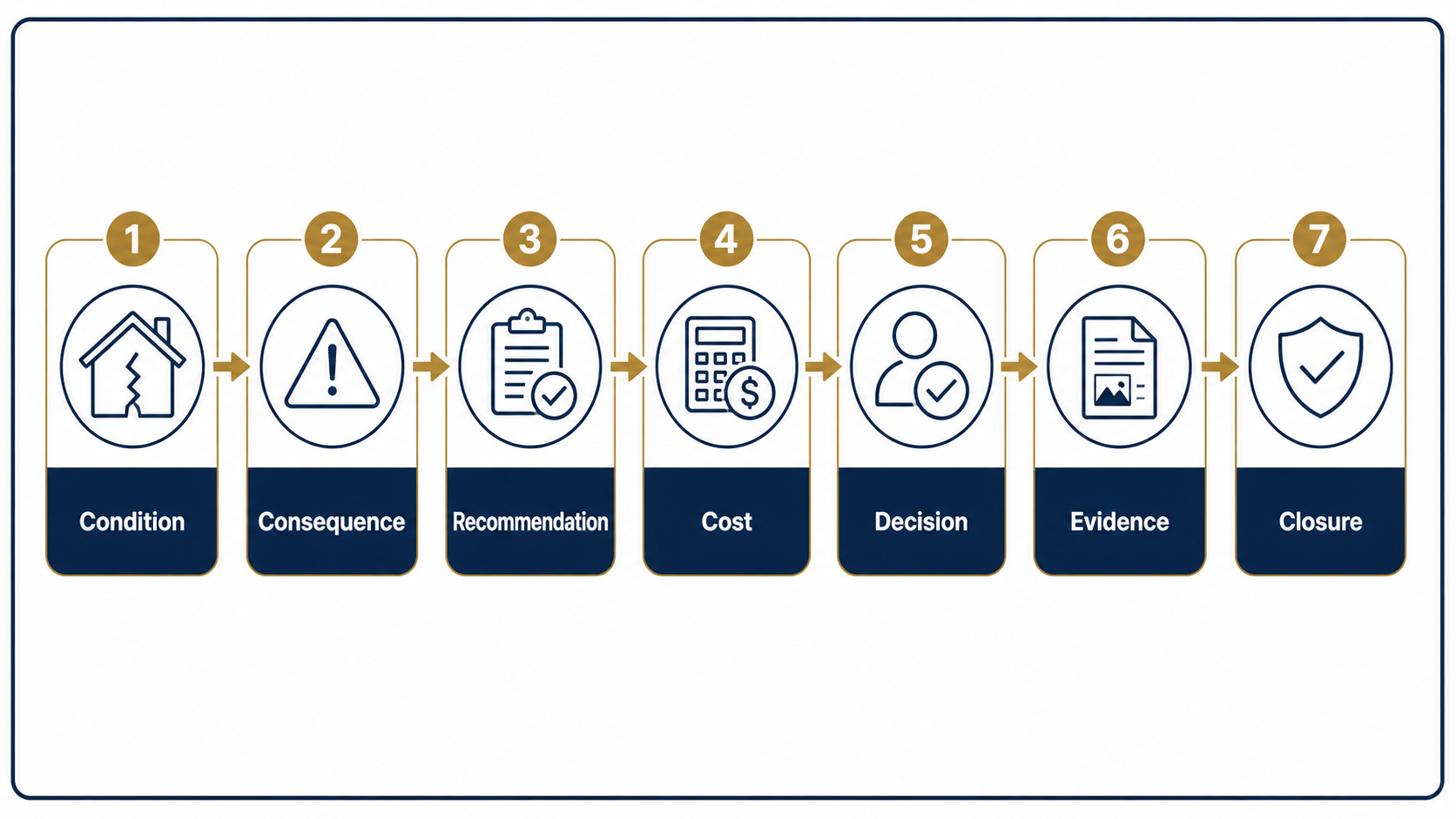
- Coastline Equity, Condition to Closure framework

About the Author: Anthony A. Luna
Anthony A. Luna is the Owner and CEO of Coastline Equity and author of Property Management Excellence. A licensed California real estate broker, he leads commercial and multifamily management operations across Southern California.
Services & Regional Coverage
Let's elevate the property management industry together. Share this blog with fellow investors.



More about Coastline Equity
-
Property Management Services
 Explore Our Services
Our team will handle all your property needs, offering specialized services such as in-depth inspections, liability management, staff recruitment and training, and round-the-clock maintenance—expert support tailored to the unique requirements of your real estate assets.
-
About Us
.webp?width=300&height=200&name=charles-forerunner-3fPXt37X6UQ-unsplash-1920w%20(1).webp) Our Company
Our CompanyOur dedicated team transforms property management challenges into opportunities. From tenant management to streamlined rent collection and proactive maintenance.
-
Property Management Excellence
 About Our CEO
Anthony A. Luna is CEO of Coastline Equity and author of Property Management Excellence. He writes about Southern California commercial and multifamily property management, owner decisions and the work required to follow repairs through completion.
-
Insights
 Explore Our Blog
Learn more about Coastline Equity's property management practices & processes and how we support our clients with education and a growth mindset. Coastline Equity Property Management is your partner as you continue to learn and grow.