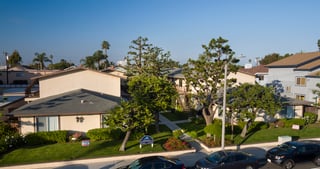
If you own a California rental home or apartment building, the useful question is what a prospective manager will do for your property and how you can verify it. Ask for the broker identity, a sample owner report, the proposed management agreement and the decision limits before treating a certification or software demo as proof of performance.
Check the licensed activity and supervision
California Business and Professions Code section 10131(b) includes compensated leasing and rent collection for others in broker activity. Section 10131.01 gives activity-specific exceptions for resident managers and certain supervised employees. It does not turn every property-management task into an unlicensed exception. Ask who the broker of record is, who supervises leasing and collections, and which tasks staff may perform. Verify the license and status in the California DRE public lookup.
Ask for a property-specific law and notice file
A manager should show how the team identifies the city, building, owner entity and exemption facts before recommending a rent increase or ending a tenancy. California’s section 1947.12 rent cap and section 1946.2 just-cause rules have coverage conditions; local law may be more restrictive. Ask for a sample review showing the controlling rule, rent history, notice timing and who approves the action. A statewide percentage or one-year occupancy shortcut cannot decide every property.
Security deposits are another useful test. Current Civil Code section 1950.5 generally calls for an itemized statement and any remaining deposit within 21 calendar days after vacancy. It also addresses move-in and move-out photographs, supporting documents for deductions, estimates when work or invoices are pending, exceptions to supporting-document delivery, and electronic return where applicable. Ask how the manager records condition, work orders, invoices, delivery method and the deadline; do not accept “we always send a receipt at day 21” as the whole process.
Separate credentials from operating proof
The California Certified Residential Manager (CCRM) program covers leasing, maintenance, budgeting, fair housing and supervision. IREM’s Certified Property Manager (CPM) designation is another education and experience signal. Neither designation replaces the required license analysis or proves that this manager will follow through on your building. Ask who holds each credential, whether it is current, and who actually handles your account.
Ask to inspect the records the software produces. If a firm names AppFolio, Yardi, Buildium, RentSpree or Zillow Rental Manager, ask to see an actual owner report, work-order trail, lease-expiration queue and screening decision record with private applicant information removed. The FTC’s landlord consumer-report guidance explains permissible purpose and adverse-action notice duties when a report influences a decision. A screening product does not guarantee a suitable resident or remove the owner’s duty to set lawful criteria.
Test the marketing and inquiry handoff
Ask for a recent listing example. Check whether its photos, rent, availability date, showing instructions and contact details agree across the property website and other channels. Canva, Mailchimp and social platforms are possible tools for creative work, email or distribution; the useful evidence is the published listing and who keeps each version current. Do not assume a firm uses those tools because they appear in a sales pitch.
Then follow one inquiry through the process: who receives it, who responds, how showings are scheduled, and where an application goes after the showing. Ask for a dated count of inquiries, showings and applications for a comparable vacancy, with the source channel and follow-up record. That sequence can expose an unanswered inbox or stale ad; it cannot promise a shorter vacancy, a particular applicant or higher rent.
Review contractor controls and listing integrity
Ask how the manager checks a contractor’s identity, license status, insurance and work scope before approval. Use the CSLB license lookup for work that requires a license. Business and Professions Code section 7048 has a narrow minor-work exemption with an aggregate price below $1,000 and other conditions; an owner should not assume every small invoice requires a license or that every unlicensed task is lawful. Ask who confirms permits, approvals, vendor coverage and completion evidence.
Rental ads also need a control. The FTC describes copied-listing scams that replace the real contact details and collect money or information. Ask where official listings appear, who monitors impersonation and how an applicant can confirm the correct payment channel. Monitoring reduces confusion; it cannot promise that scams will never occur.
Read the management proposal
Compare the written scope for leasing, collections, maintenance coordination, emergencies, owner reporting and legal-process coordination. Mark exclusions, leasing and management fees, vendor charges, spending thresholds, reporting cadence, record access and termination terms. Ask who authorizes a repair above the threshold and what the manager documents after completion.
Request a sample monthly packet with rent roll, delinquency aging, open work, invoices and budget variance. Expense coding matters too: IRS Publication 527 distinguishes deductible repairs and maintenance from capital improvements that are recovered differently. A manager can preserve clean records; the owner’s actual tax treatment depends on the work and tax facts.
Bring the same property facts and questions to each firm. Compare the broker and team, written scope, sample records, fees and owner decision rights. Coastline’s services page explains its proposal-based scope and reporting; request the written proposal for the property you own before comparing promises.
Operational Systems & Management Oversight
For our comprehensive operating standard and vendor accountability framework, review the Commercial Property Management Scorecard for Owners.



 Explore Our Services
.webp?width=300&height=200&name=charles-forerunner-3fPXt37X6UQ-unsplash-1920w%20(1).webp) Our Company
Our Company About Our CEO
 Explore Our Blog