Murrieta commercial property owners should expect their management team to provide disciplined lease administration, transparent Common Area Maintenance (CAM) reconciliations, verified vendor compliance, and an accountable monthly reporting rhythm that connects property activity directly to ownership decisions.
Local Commercial Context in Southwest Riverside County
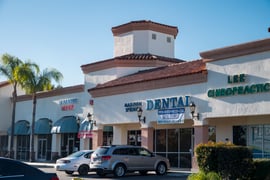
Murrieta occupies a pivotal commercial position at the junction of Interstate 15 and Interstate 215 in Southwest Riverside County. This transportation corridor connects the Inland Empire to North San Diego County, supporting a diverse mix of neighborhood retail centers, multi-tenant professional office buildings, medical suites, and light industrial business parks.
Operating a commercial property in this market requires precise boundary and jurisdictional awareness. Commercial parcel requirements can differ significantly between properties located within Murrieta municipal city limits and those in adjacent unincorporated areas governed by the Riverside County Board of Supervisors. Property owners and managers can verify specific zoning classifications, parcel boundaries, and municipal service districts through the City of Murrieta Maps and Zoning Information portal. Confirming municipal versus county jurisdiction is essential for local business licensing, sign ordinances, parking compliance, and commercial permitting.
The Commercial Management Operating Standard
Effective commercial property management is not passive rent collection; it is active operational stewardship. A professional management team establishes a documented operating plan tailored to the asset type, whether a triple-net (NNN) retail strip, an office building with shared amenities, or a flex industrial park.
That standard rests on four operational pillars:
- Lease administration and critical date tracking. Commercial leases are complex legal agreements with strict timelines. A management team must track option notice windows, annual rent escalations, gross sales reports, and required insurance renewal dates across every active lease.
- Rigorous vendor compliance. Contractors working on commercial roofs, HVAC systems, fire alarm panels, and parking lots must carry active licenses and verified insurance with Additional Insured endorsements before stepping on site.
- Preventative maintenance scheduling. Routine physical inspections of roofs, backflow devices, grease interceptors, exterior lighting, and mechanical plants protect capital value and limit emergency repair expenditures.
- Actionable monthly financial reporting. Owners require clear income statements, balance sheets, rent rolls, delinquency aging, and variance explanations that illuminate the operational reasons behind each financial shift.
Labelled Scenario: Lease Critical Dates and CAM Recovery Reconciliation
To understand the difference between routine bookkeeping and accountable commercial management, consider how an operating team handles lease terms and expense recoveries:
Illustrative Commercial Scenario: An owner holds a 12,000-square-foot neighborhood retail center in Murrieta occupied by four commercial tenants under NNN leases. Two specific operational situations arise in the second quarter:
- Situation 1: Renewal Option Window. Tenant A operates a 3,000-square-foot retail suite with a five-year lease expiring on December 31. The lease specifies that the tenant must exercise its five-year renewal option in writing at least 180 days prior to lease expiration (July 5), with rent resetting to fair market value but not less than the current base rate plus 3%. A diligent property manager flags this critical date 60 days before the notice deadline, consults with the owner regarding market rental trends along the I-15 corridor, and establishes a clear negotiating framework before the option window opens.
- Situation 2: Controllable vs. Non-Controllable CAM Audit. Tenant B occupies 4,000 square feet under a modified NNN lease that caps annual increases in controllable operating expenses (janitorial, landscaping, common area power) at 5%, while exempting non-controllable costs (property insurance premiums and municipal utility fees) from the cap. During annual reconciliation, overall common area expenses rose by 14%, driven primarily by an 18% increase in property hazard and liability insurance. Rather than sending an unadjusted bill, the manager isolates controllable expenses ($12,000, capped at a $600 increase) from non-controllable insurance costs ($18,000, fully passed through). The manager provides the owner with an itemized reconciliation audit showing exactly $3,840 in allowable pass-through recovery from Tenant B before delivering the annual CAM reconciliation statement.
In both situations, the management team provides the owner with verifiable documentation, legal boundary alignment, and clear decision points before tenant communications occur.
What Murrieta Commercial Owners Should Receive Each Month
Monthly reporting should never consist of raw numbers without narrative context. Murrieta commercial property owners should expect a complete owner package delivered on a consistent monthly cadence, including:
- Executive Operating Summary. A concise overview highlighting tenant conversations, lease renewal updates, major maintenance completions, and pending owner decisions.
- Detailed Rent Roll. Unit numbers, square footage, tenant legal names, lease commencement and expiration dates, current base rent, CAM contribution rates, and security deposit holdings.
- Delinquency Aging and Collection Status. A ledger tracking any unpaid rent or CAM charges, accompanied by documented notices, tenant correspondence, and cure deadlines.
- Work Order and Maintenance Aging. An inventory of open and completed repair requests, identifying assigned vendors, approved cost estimates, and completion sign-offs.
- Budget Variance Explanations. An income statement comparing actual revenue and expenses against budget, with written explanations for any variance exceeding agreed owner thresholds.
- Lease Critical Dates Calendar. An updated schedule showing approaching option deadlines, scheduled rent steps, and certificate of insurance expiration dates.
Warning Signs of Management Drift
Commercial owners should recognize early indicators that their management partner is slipping into reactive drift:
- Lease renewal option windows pass without advance notice to the owner, reducing negotiating leverage.
- Annual CAM reconciliations are delayed past mid-year or issued with calculations that trigger tenant disputes.
- Vendors perform maintenance without verified certificates of insurance or prior written scope approval.
- Monthly financial statements arrive weeks late or fail to explain significant budget variances.
- Common area inspections are neglected until a tenant lodges a formal complaint regarding building systems or grounds.
Questions to Ask Before Hiring or Switching Commercial Managers
Before selecting a commercial property manager in Murrieta, owners should ask prospective teams five targeted operational questions:
- How do you abstract commercial leases and track critical option deadlines? The manager should demonstrate a reliable software system or calendar tracking workflow for renewals, CPI adjustments, and insurance expirations.
- What is your documented process for annual CAM reconciliations? Look for clear methodology in distinguishing controllable from non-controllable expenses and reconciling tenant pro-rata shares.
- How do you vet and clear commercial vendors before dispatch? Confirm that trade licenses, general liability policies, Additional Insured endorsements, and statutory workers' compensation coverage are verified prior to site entry.
- What does your standard monthly reporting package include? Ask to see an anonymized sample owner package that includes variance narratives and operational summaries.
- How do you handle property onboarding during the first 90 days? The manager should outline a systematic intake protocol: lease audits, tenant contact verification, building inspection, vendor contract review, and operating budget reconciliation.
The Operating Partnership
Accountable commercial property management protects asset value, strengthens tenant retention, and ensures reliable cash flow. Commercial owners along the Southwest Riverside corridor need an operating partner with the discipline to enforce lease covenants, manage physical risk, and report property performance with complete transparency.
If your commercial asset is not receiving that level of oversight, evaluate whether your current management arrangement provides the clarity and execution your property demands.
Related Commercial Resources
A Practical Next Step
To discuss your commercial property, lease portfolio, or management requirements in Murrieta, request a confidential commercial management proposal from Coastline Equity.
Request a Murrieta Commercial Management Proposal
Operational Systems & Management Oversight
For our comprehensive operating standard and vendor accountability framework, review the Commercial Property Management Scorecard for Owners.





 Explore Our Services
 Our Company
 About Our CEO
 Explore Our Blog